
Imagine if every manager within your company possesses the skills and confidence to inspire, guide, and empower their teams toward success. This vision of leadership excellence is not just a distant goal but an attainable reality achievable through deliberate efforts in supporting and strengthening managerial impact.
Effective leadership is the cornerstone of any successful company, propelling teams forward, fostering innovation, and nurturing a culture of excellence. However, the pivotal role of a manager in maintaining this momentum and ensuring the team reaches its full potential cannot be overstated.
When managers have the necessary skills and support, they become adept at driving teams toward achieving organizational objectives. By understanding the pivotal role of managers, addressing common challenges, and implementing strategies to reinforce leadership skills, companies can cultivate a culture of empowerment and growth.
Investing in training and development opportunities for managers is vital for enhancing their impact on the team. Providing resources for continuous learning not only benefits individual managers but also contributes to the overall success of the organization. Moreover, upper management plays a crucial role in supporting and reinforcing leadership by offering guidance, mentorship, and alignment with company values.
The ripple effect of strong leadership is great, leading to increased productivity, heightened employee satisfaction, and, ultimately, business success. By prioritizing the development of effective leaders at all levels of the organization, companies can build a resilient foundation for sustainable growth and innovation.
In this article, we will explore the multifaceted aspects of leadership reinforcement and explore actionable strategies to empower managers, foster a culture of excellence, and drive organizational success.
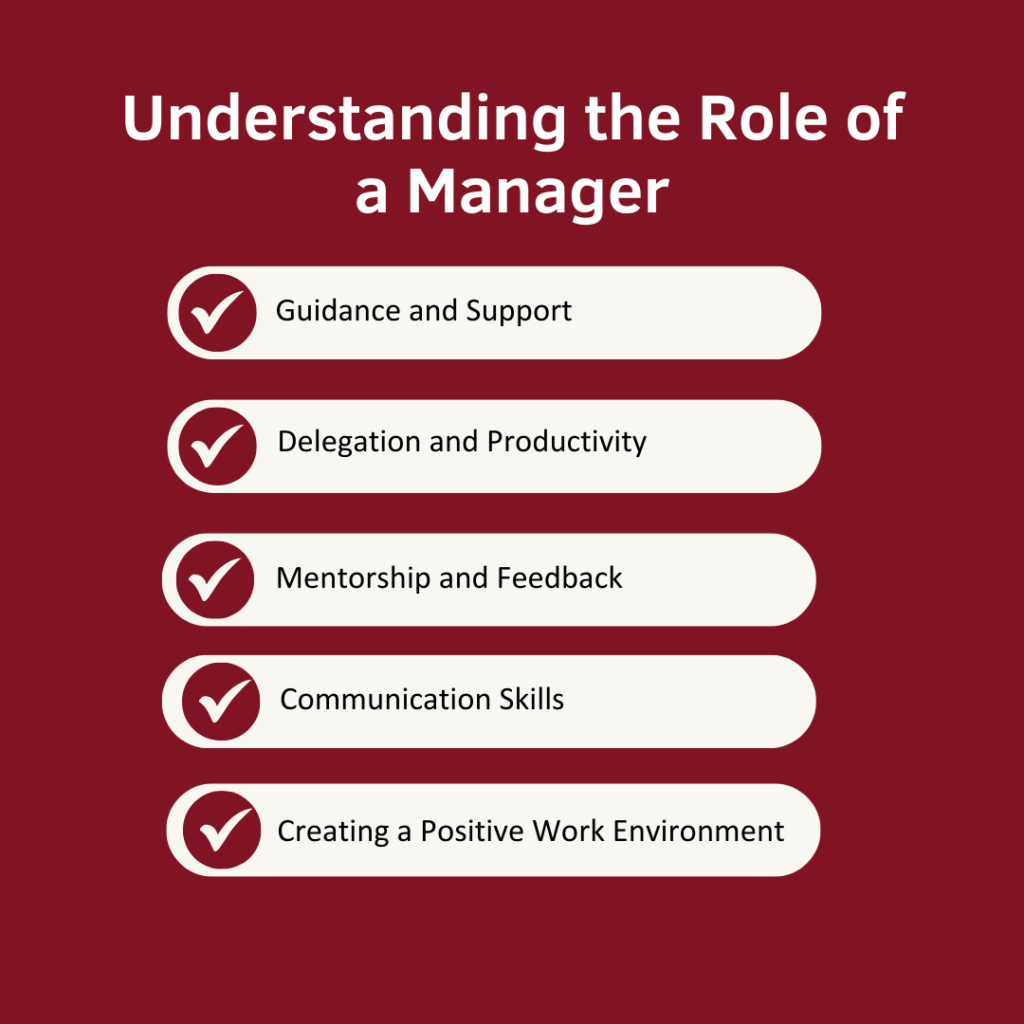
Understanding the Role of a Manager and Their Impact on the Team
Managers serve as vital links between upper management and employees within a team, facilitating communication and guiding the team toward achieving organizational objectives. Their influence on the team can be profound, encompassing the ability to inspire, motivate, and enhance performance.
Common Challenges Faced by Managers and How to Overcome Them
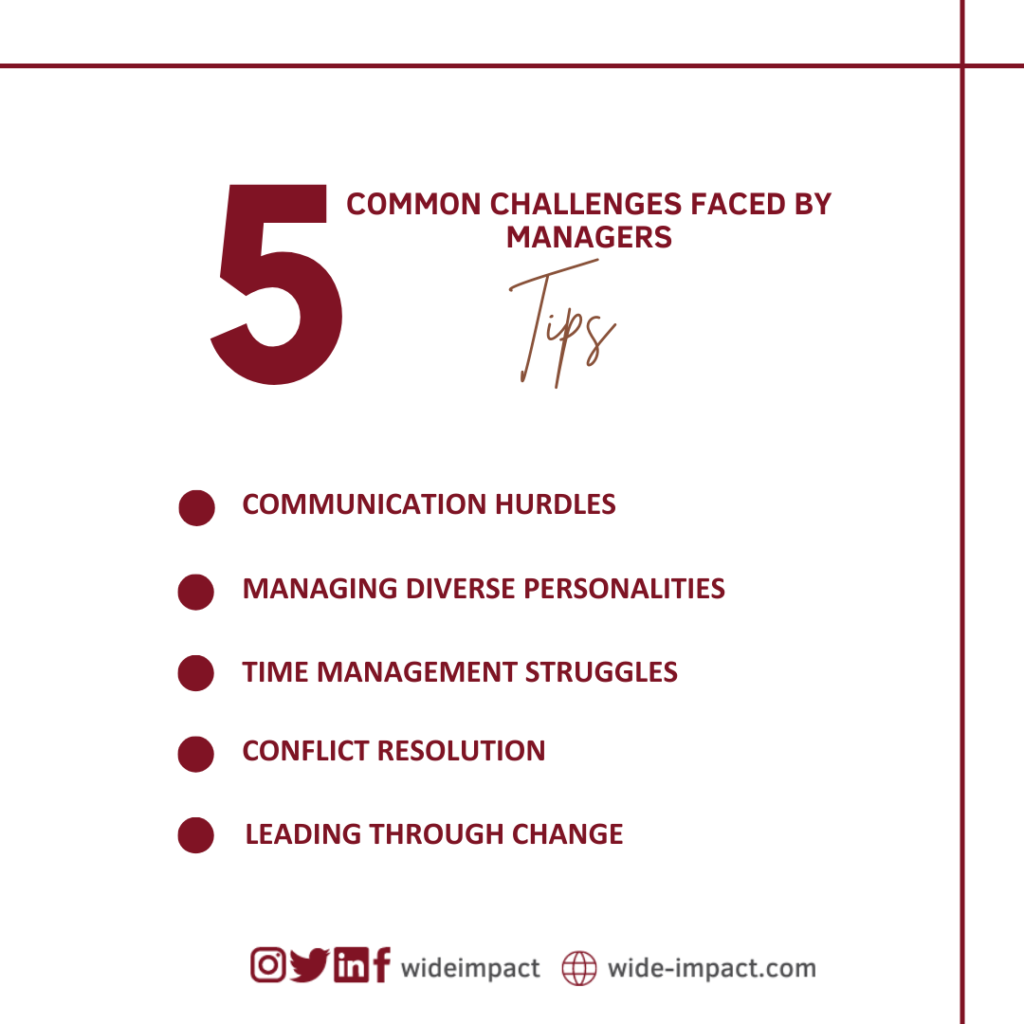
Being a manager presents various challenges, but with proactive strategies, they can be effectively navigated:
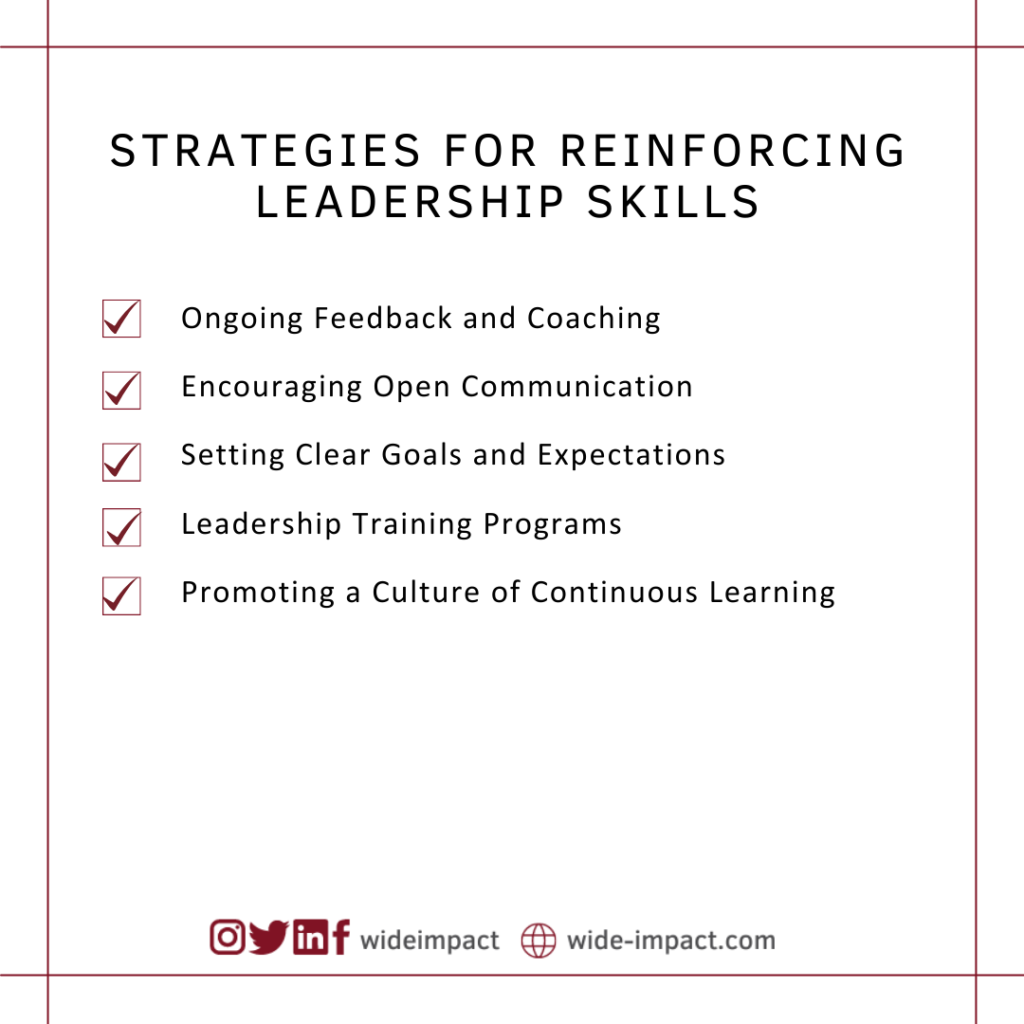
Strategies for Reinforcing Leadership Skills and Enhancing Their Impact
Enhancing leadership skills and maximizing their impact requires a multifaceted approach. Here are effective strategies to achieve this goal:
Training and Development Opportunities for Managers
Investing in the development of managerial talent through training opportunities is vital for organizational success. Here are key strategies to enhance leadership skills and foster continuous growth among managers:
1. Tailored Workshops and Seminars: Offer workshops and seminars designed to address specific leadership challenges and opportunities. Topics may include communication skills, decision-making strategies, conflict resolution techniques, and strategic thinking.
2. Online Courses and Resources: Provide access to online courses and resources that enable managers to learn at their own pace and convenience. These resources cover a wide range of topics relevant to leadership development, allowing managers to expand their knowledge and skills effectively.
3. One-on-One Coaching Sessions: Arrange personalized coaching sessions for managers to receive individualized guidance and support. These sessions focus on identifying strengths, addressing areas for improvement, and setting actionable goals for professional growth.
4. Continuous Learning Initiatives: Foster a culture of continuous learning within the organization by encouraging managers to seek out new opportunities for skill development and knowledge acquisition. This can include attending industry conferences, participating in professional networking events, or pursuing advanced degrees or certifications.
5. Industry Trends and Best Practices: Keep managers updated on current industry trends and best practices through regular communication and access to relevant resources. Staying informed enables managers to make informed decisions and adapt their leadership approach to changing circumstances effectively.
6. Feedback and Evaluation: Provide regular feedback and performance evaluations to managers, highlighting areas of strength and areas for improvement. This feedback loop is essential for guiding development efforts and ensuring that training initiatives align with organizational goals.
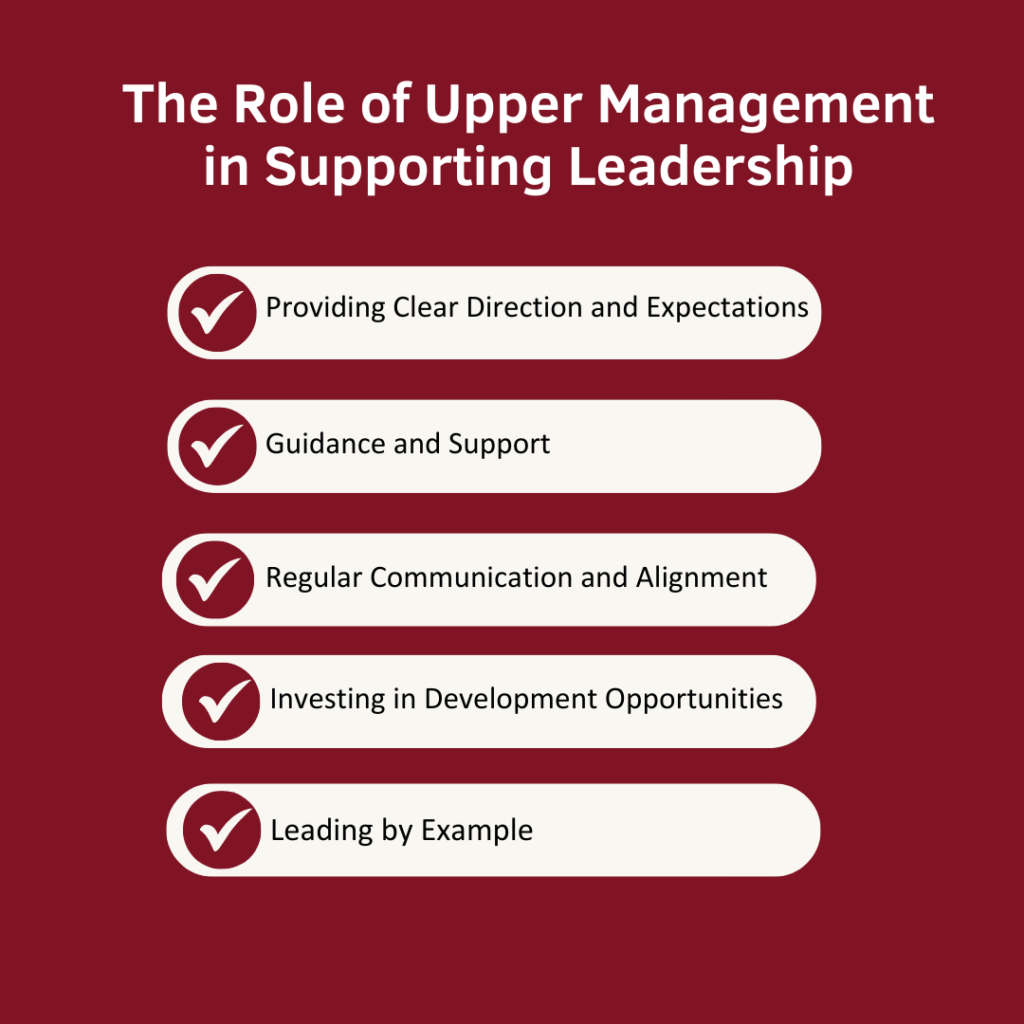
The Role of Upper Management in Supporting and Reinforcing Leadership
Upper management plays a pivotal role in nurturing and strengthening leadership within a company. Here's how they contribute to this crucial aspect:
Strong leadership is the backbone of any successful company. When managers are equipped with the skills and support they need, they can effectively guide their teams toward achieving organizational goals. By understanding the role of a manager, addressing common challenges, and implementing strategies to reinforce leadership skills, companies can create a culture of empowerment and growth.
Investing in training and development opportunities for managers is key to enhancing their impact on the team. Providing resources for continuous learning not only benefits individual managers but also contributes to the overall success of the organization. Upper management plays a critical role in supporting and reinforcing leadership by providing guidance, mentorship, and alignment with company values.

Dr. Salam Slim Saad, Training Manager – Wide Impact